
January 5, 2026
Understanding parent-led and baby-led weaning: which approach fits your case
A gentle reminder: The content in this article is for informational purposes only and is not intended to be a substitute for professional medical advice, diagnosis, or treatment. Always seek the advice of your pediatrician or another qualified health provider with any questions you may have regarding a medical condition. If you are facing a problem that feels sharp, persistent, or overwhelming, reaching out for professional help is a sign of strength.
The transition to solids is less about the specific consistency of the food and more about the philosophy of the feeding process. Choosing between a parent-led or a baby-led approach involves deciding who takes the primary responsibility for the mechanics of eating: the caregiver or the infant. Each method offers a different way to navigate the first year of life, and the "best" choice is often the one that aligns with your baby’s developmental pace and your family’s comfort level.
In a parent-led process, the caregiver acts as the primary facilitator. You determine the timing, the volume, and the delivery of the meal. By being the one to offer the food, whether via a spoon or by placing pieces directly in the baby's mouth, you can closely observe how your child handles different types of food and ensure they are receiving a balanced intake of specific nutrients. This method provides a sense of structure and can be particularly reassuring for parents who want to minimize mess or who feel more confident overseeing every swallow.
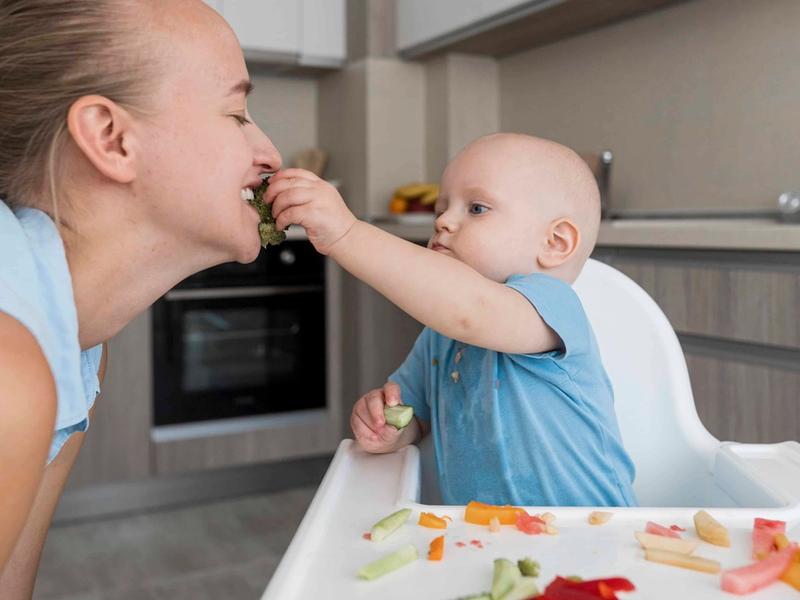
In a baby-led process, the emphasis shifts to infant autonomy. The caregiver's role is to provide safe, appropriately prepared foods, but the baby decides which items to pick up, how to explore them, and how much to actually eat. This process is rooted in the idea that babies are capable of self-regulating their hunger and developing their motor skills through hands-on exploration. It requires a high degree of patience from the parent, as the early stages of this process are often more about sensory learning and play than significant caloric intake.
Deciding which process to follow is not a permanent commitment, and many families find that their approach changes as the baby grows. To determine what might work for you, consider the following factors.
Observe your baby’s interest and physical ability. Some babies are highly motivated to grab what is on their parent's plate and become frustrated when they are not allowed to feed themselves – these infants often thrive in a baby-led environment. Other babies may be more hesitant or have sensitive oral-motor reflexes, appearing more comfortable when a parent gently guides the feeding process.
Consider your daily routine. Baby-led weaning often allows the infant to join the family at the dinner table and eat modified versions of the family meal, which can be more convenient but also significantly messier. Parent-led feeding may be more efficient for families with tight schedules or for caregivers who prefer a more contained, supervised mealtime experience.
Parenting involves a significant emotional component. If the idea of a baby self-feeding whole pieces of food causes you significant anxiety, a parent-led approach by gradually introducing more complex foods under your direct supervision may lead to a calmer and more positive feeding environment for both of you.
While these philosophies provide a framework, it is vital to remember that feeding is a medical and nutritional milestone, not just a lifestyle choice. You should always consult your pediatrician or a pediatric nutritionist before beginning the transition to solids. Every baby has unique nutritional requirements, and experimenting with different methods without professional oversight can lead to nutrient deficiencies or safety risks.
A health professional can help you determine if your baby is physiologically ready for the transition and can provide a medically sound plan tailored to your child's growth curve. They can also offer specific advice on how to introduce potential allergens safely and ensure that, regardless of the process you choose, your baby is receiving the essential vitamins and minerals needed for brain and body development.
Reference:
D'Auria E, et al (2018). Italian Society of Pediatrics. Baby-led weaning: what a systematic review of the literature adds on. Ital J Pediatr. https://pmc.ncbi.nlm.nih.gov/articles/PMC5934812/
Rachael W Taylor et al (2021). Nutritional Implications of Baby-Led Weaning and Baby Food Pouches as Novel Methods of Infant Feeding: Protocol for an Observational Study. JMIR Research Protocols. Volume 10, Issue 4. https://www.sciencedirect.com/org/science/article/pii/S1929074821002961
Cameron SL, Heath AL, Taylor RW (2012). How feasible is Baby-led Weaning as an approach to infant feeding? A review of the evidence. Nutrients. https://pmc.ncbi.nlm.nih.gov/articles/PMC3509508/
Related Articles

January 13, 2026
Transitions in dairy: a guide to introducing cow milk safely
Postpone the introduction of cow milk as a primary drink until twelve months to prevent iron deficiency anemia and avoid overwhelming immature kidneys with excessive proteins and minerals. Upon introduction, prioritize pasteurized, full-fat milk to support brain development and strictly adhere to hygiene standards to prevent foodborne illness.
January 12, 2026
Navigating the first flavors: a guide to safe and healthy solid foods
Navigate the transition to solid foods by prioritizing biological safety through the selection of single-ingredient, low-irritant options and the exclusion of additives like salt and sugar. Master the principles of "food geometry" to eliminate choking hazards and strictly avoid high-risk foods like honey to protect your baby's developing system.

January 8, 2026
Balanced nutrition: managing feeding volumes and growth in breastfed babies
Shift your perspective from volume tracking to interpreting physiological cues to ensure your breastfed baby receives adequate nutrition without the stress of constant measurement. Learn to distinguish normal developmental patterns from genuine supply issues, and rely on professional growth monitoring to validate your baby's health trajectory.

January 5, 2026
Understanding tube feeding: a guide to necessity, safety, and care
Learn the role of enteral nutrition and the essential safety protocols regarding tube placement and hygiene, as well as strategies to facilitate future oral transitions by maintaining the developmental association between sucking and satiety.